
Electric Cooking Nepal Government Policy 2026 — NEA and AEPC Programs Explained
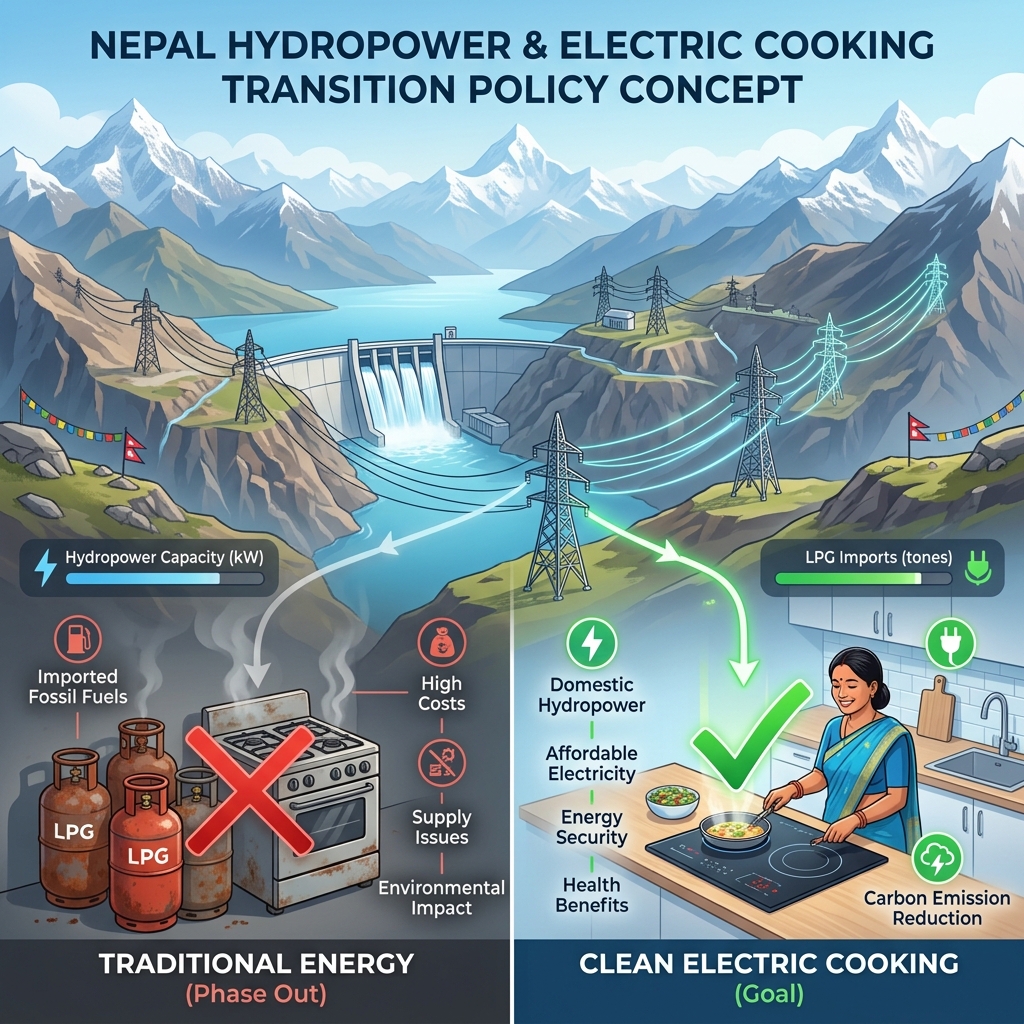
Nepal has officially positioned electric cooking as the cornerstone of its national energy transition. The shift from LPG gas to induction and electric cooktop is driven by three simultaneous government forces: NEA electricity surplus, AEPC clean cooking mandate, and the Energy Sector Development Plan 2030.
Why Nepal’s Government Is Promoting Electric Cooking
The LPG Import Problem
Nepal spends approximately NPR 50–70 billion annually importing LPG gas. Every cylinder burned in Nepal’s kitchens represents foreign exchange outflow to India. Replacing LPG with domestically-generated hydroelectricity keeps this money inside Nepal’s economy.
Hydropower Surplus
Nepal’s installed hydropower capacity has grown from 900 MW (2019) to over 2,800 MW (2025). Nepal now produces more electricity than it can consume domestically — and exports surplus to India. Increasing domestic electric cooking consumption uses this surplus productively.
Clean Air — Kathmandu Air Quality Crisis
Kathmandu Valley’s PM2.5 readings regularly exceed WHO safe limits. LPG combustion inside enclosed Nepali kitchens contributes to indoor air pollution. Electric cooking produces zero combustion byproducts inside the home.
Key Government Programs and Policies
1. NEA Electric Cooking Promotion Plan
Nepal Electricity Authority’s active program to transition urban and peri-urban households from LPG to electric cooking:
Key features:
- 20% electricity bill discount for registered electric cooking households (first 150 units/month)
- Simplified “electric cooking registration” at local NEA offices
- Targeted campaigns in Kathmandu, Pokhara, Biratnagar, Butwal, and Hetauda distribution areas
How to register:
Visit your local NEA office with meter number, citizenship, and purchase receipt of electric cooking appliance. Discount activates within 1–7 working days.
2. AEPC Clean Cooking Programme
The Alternative Energy Promotion Centre (AEPC) under the Ministry of Energy runs Nepal’s clean cooking subsidy programs:
| Programme Type | Coverage | Subsidy Level |
|---|---|---|
| Rural household programme | Remote hill and mountain districts | 30–50% of appliance cost |
| Peri-urban programme | Semi-urban areas outside major cities | 15–25% of appliance cost |
| Women’s cooperative programme | Via women’s savings cooperatives | Varies by cooperative |
Contact: aepc.gov.np | Ministry of Energy, Water Resources and Irrigation, Kathmandu
3. Energy White Paper 2020 — Electric Cooking Target
Nepal’s Energy White Paper (2020) sets a formal target:
> “Replace 25% of LPG consumption with electric cooking by 2025, and 50% by 2030”
This target is backed by:
- Preferential electricity tariff for cooking households
- Import duty rationalization on induction cooktops (lower duty vs LPG appliances)
- NEA infrastructure investment in household connection upgrades for higher amperage
4. Load Growth Management — 15A Connection Upgrade
For households wanting double-burner induction (3200W–4000W), standard 5A/10A household connections may not be sufficient. NEA is actively upgrading urban household connections to 15A as part of load growth management.
Cost to upgrade connection to 15A: रु. 2,000–5,000 (varies by locality and existing wiring)
Single-burner induction stoves (up to 2200W) run on standard 10A connections without issue.
Electric Cooking Registration — Step-by-Step Process
Impact on Nepali Households — By the Numbers
| Metric | Data |
|---|---|
| Households registered for electric cooking (2024) | ~380,000 |
| Monthly NEA bill discount per urban household | रु. 150–300 |
| Annual LPG import savings (projected 2026) | NPR 8–12 billion |
| NEA electricity surplus exported to India (2024) | ~500 MW peak |
| Induction stove imports to Nepal (2025 estimate) | 180,000+ units/year |
What This Means for You as a Buyer
Buying an induction stove in Nepal in 2026 aligns with national policy — and you get tangible financial benefits:
InductionStoveNepal.com stocks all major brands — Baltra, Prestige, Philips, CG, Bajaj, Pigeon, and Yasuda — with free delivery inside Kathmandu Valley and Cash on Delivery available.
